

What Is a Handwritten (Holographic) Will?
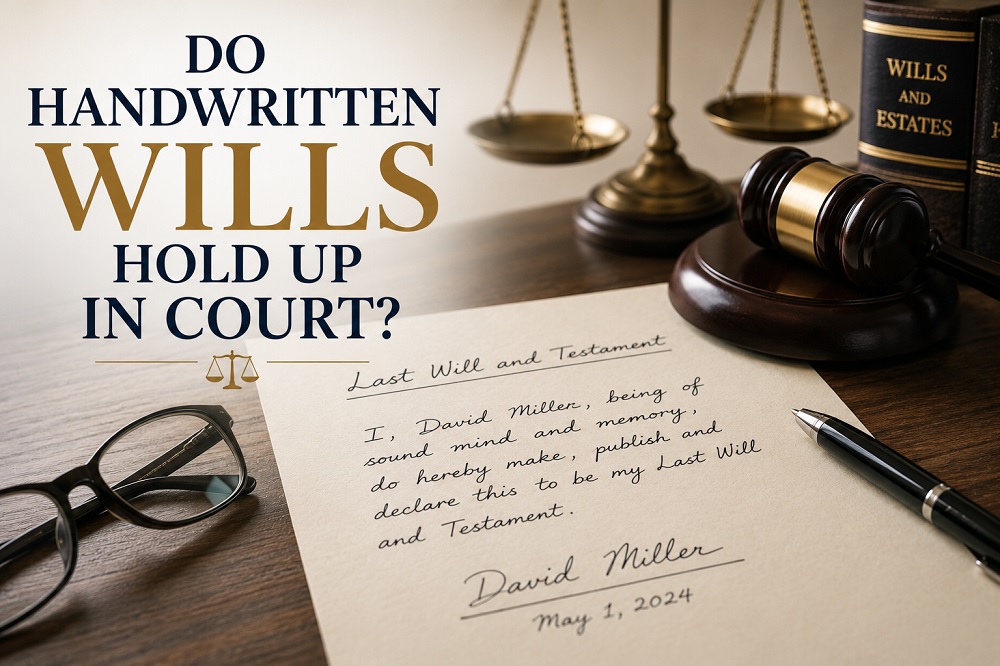
A handwritten will, legally called a holographic will, is a will written entirely in the testator’s (the will-maker’s) own handwriting and signed by them, typically without witnesses or notarization. Courts treat these differently from typed or “formal” wills, which almost always require witness signatures to be valid.
The key legal question isn’t just “is it handwritten?” — it’s whether your state’s law recognizes holographic wills at all, and if so, what specific conditions it must meet.
Which States Recognize Holographic Wills?
State law controls this completely, and it varies more than most people expect.
| Category | Examples | What This Means |
| Recognize holographic wills | Texas, California, Virginia, Nevada, Oklahoma | Valid without witnesses if requirements are met |
| Do NOT recognize them | New York, Florida, Connecticut, Maryland | Handwritten will alone is generally invalid |
| Conditional recognition | Some states — military members or emergencies | Special circumstances only |
Because these rules change and vary by state, always verify current requirements with your state’s probate court or an estate attorney before relying on a handwritten will.
Requirements for a Valid Holographic Will
Testator’s Intent
The document must clearly show the person intended it as their will — not just a list of thoughts or a letter mentioning what they’d “like” to happen. Courts look for language like “this is my will” or “I leave my property to.”
Handwriting Requirements
Most states that allow holographic wills require the material provisions — who gets what — to be in the testator’s own handwriting. A pre-printed will template with blanks filled in by hand may not qualify in some states, since it isn’t “entirely” handwritten.
Signature
The will must be signed by the testator. Some states also require a date, since courts may need to determine which of multiple wills is the most recent.
No Witnesses Required (in Most Cases)
Unlike typed wills, most states don’t require witnesses for a valid holographic will — this is the major legal difference and also the biggest source of court disputes, since there’s no third party to confirm it wasn’t forged or written under pressure.
Real-Life Scenario
Imagine a woman in Texas writes a note on lined paper: “I want my house to go to my daughter, Sarah, and my savings split between my two sons. Signed, Mary Jones, March 3, 2024.” If this is entirely in her handwriting and signed, Texas courts are likely to accept it as a valid holographic will, since Texas recognizes them and this note shows clear intent, is handwritten, and signed.
Now imagine the identical note was written by someone living in Florida. Because Florida doesn’t recognize holographic wills, that same document would likely be rejected in probate court, and the estate would instead be distributed according to Florida’s intestacy laws — the default rules for when someone dies without a valid will.
Common Mistakes People Make
- Assuming handwritten wills are valid everywhere — validity depends entirely on state law where the person lived or owned property.
- Using a typed template and only handwriting the signature — many states require the entire document to be handwritten.
- Forgetting to date the document — critical if multiple wills or drafts exist.
- Vague language about intent — notes that sound like personal reflections are often challenged in court.
- Not accounting for other estate documents — a handwritten will found alongside an older typed will can create disputes over which controls.
When to Contact a Lawyer
- You’ve found a handwritten document and aren’t sure whether your state recognizes it.
- There are multiple wills or drafts, and it’s unclear which is the most recent or valid one.
- Family members disagree about the document’s authenticity or the deceased’s intent.
- The estate includes significant assets, real property, or business interests.
- You want to write your own will and want to make sure it will actually hold up.
Frequently Asked Questions
Q1. Can a handwritten will be contested in court?
- Yes. Even in states that recognize holographic wills, they’re contested more often than typed, witnessed wills because there’s no third-party verification of authenticity or the testator’s mental state at the time.
Q2. Does a handwritten will need to be notarized?
- No — most states that accept holographic wills do not require notarization, though notarizing (or using a self-proving affidavit) can make probate faster and reduce disputes.
Q3. What happens if my state doesn’t recognize handwritten wills?
- The estate is typically distributed under that state’s intestacy laws, as if no will existed at all, regardless of what the handwritten document says.
Q4. Can I write my own will by hand to save money?
- You can in states that allow it, but mistakes in wording or format are common and can invalidate the document — a low-cost attorney consultation is often worth it for anything beyond a very simple estate.
Q5. Is a handwritten will valid if someone helped write parts of it?
- Often no — most states require the material provisions to be entirely in the testator’s own handwriting, so significant help from someone else can jeopardize validity.
Conclusion
Handwritten wills can absolutely hold up in court — but only in certain states, and only when they clearly show intent, are entirely in the testator’s handwriting, and are properly signed. If you’re relying on one, or writing one yourself, confirm your state’s specific rules first, and don’t assume a document that worked for a relative in another state will work the same way where you live. When real money, property, or family relationships are at stake, a short consultation with a probate attorney is one of the cheapest forms of insurance you can buy.